Russian Winter Packing List for Students from Kerala
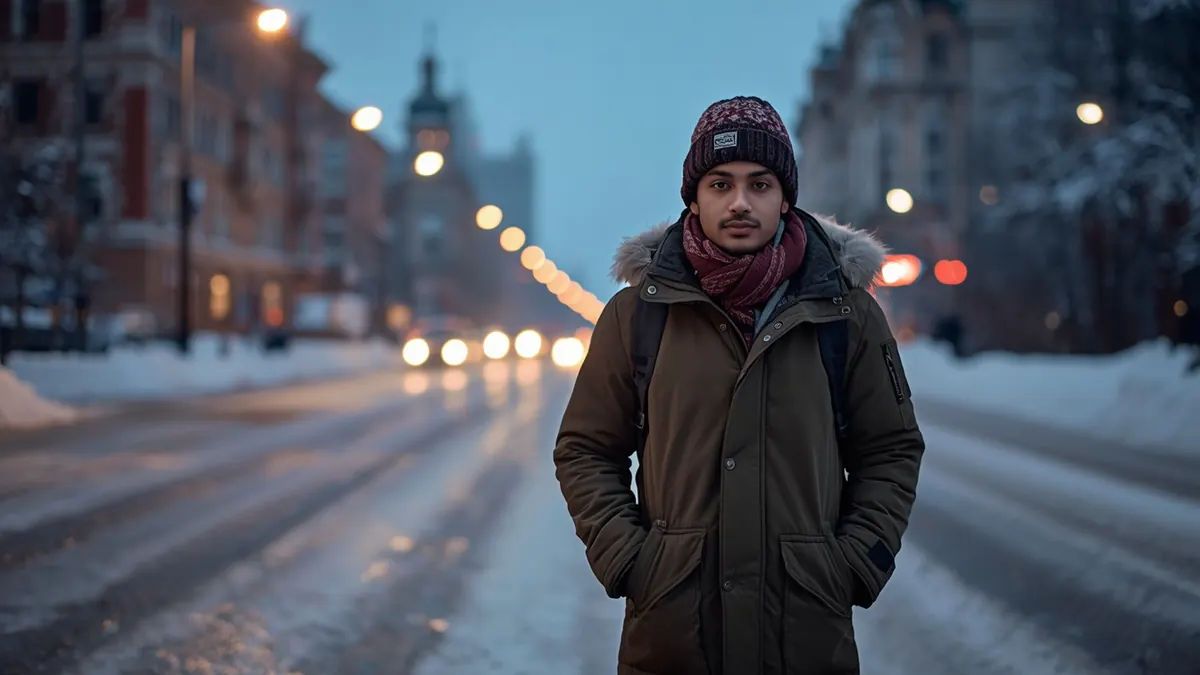
January in a Russian university city is between 1 degree above zero and 17 degrees below on average, and colder at night. A student from Kerala has never needed clothing for that. This post gives the January and July means for 16 cities, explains how heating works indoors, and gives a packing list: what to carry from home and what to buy after you arrive.
In short: the January mean temperature in the university cities we track runs from +1.0 °C in Makhachkala to −17.5 °C in Tomsk, with Moscow at −6.2 °C and Kazan at −10.0 °C. These are monthly means; a night is colder than the mean, and Kemerovo has recorded −47.9 °C in January. Pack thermal underwear, a few warm layers and a hat and gloves from Kerala, and buy the winter jacket and boots in Russia after you arrive, with a senior student, because the right jacket depends on your city. Rooms are heated by central heating, so what you need indoors is light.
How cold is a Russian winter for a student from Kerala?
The figures below are 30-year January and July mean temperatures from the climate tables behind our city pages (Wikipedia climate sections, with the periods named in the caption). A mean is the average of day and night over the whole month. On a given morning it will often be 5 to 10 degrees colder than the mean in a cold spell, and wind makes it feel colder. Treat the January column as the typical month and plan for worse.
| City | January mean | July mean | Band |
|---|---|---|---|
| Makhachkala | +1.0 °C | 24.8 °C | Mildest |
| Rostov-on-Don | −3.0 °C | 24.0 °C | Mild |
| Astrakhan | −3.6 °C | 26.1 °C | Mild |
| Saint Petersburg | −5.0 °C | 19.2 °C | Mild |
| Kursk | −5.9 °C | 20.3 °C | Mild |
| Moscow | −6.2 °C | 19.6 °C | Mild |
| Tver | −7.0 °C | 19.0 °C | Mild |
| Samara | −9.6 °C | 21.9 °C | Cold |
| Kazan | −10.0 °C | 20.5 °C | Cold |
| Arkhangelsk | −11.6 °C | 16.5 °C | Cold |
| Orenburg | −11.8 °C | 22.5 °C | Cold |
| Ufa | −12.2 °C | 19.8 °C | Cold |
| Perm | −12.5 °C | 18.5 °C | Cold |
| Omsk | −16.9 °C | 19.4 °C | Severe |
| Novosibirsk | −17.0 °C | 19.5 °C | Severe |
| Kemerovo | −17.3 °C | 19.3 °C | Severe |
| Tomsk | −17.5 °C | 18.8 °C | Severe |
Two things stand out for a family in Kerala. First, even the mildest city on this list is colder in January than any place you have lived. Second, the choice of university decides how serious the cold is: the gap between Moscow at −6.2 °C and Tomsk at −17.5 °C in January is more than 11 degrees. Compare fees and FMGE results first, but ask the cold question before you pay. Our city pages give the weather for each university city.
Summers are not cool everywhere. July means run from 16.5 °C in Arkhangelsk to 26.1 °C in Astrakhan, and most cities are near 19–22 °C, so you will also need light summer clothes. A student in Russia needs both wardrobes.
Heating: why indoors feels warm
Most apartment blocks and hostels in Russian cities are supplied with central heating. Under Government Decree No. 354 of 6 May 2011, as summarised by Russian municipal sources, the heating season is switched on once the average daily outdoor temperature has stayed below +8 °C for five days in a row, and switched off after five days above it. That is why heat usually arrives in autumn without a fixed date, and why hostels can be warm in January even at −15 °C outside. The practical result is that you dress for two conditions: heavy outdoors, light indoors. A student who wears the heavy jacket in the lecture hall will sweat; one who has only thin clothes will suffer at the bus stop.
Packing list: carry from Kerala
- Thermal innerwear, 2 or 3 sets. A thin close-fitting top and leggings or long johns. Cotton dries slowly; synthetic or wool blends dry faster. They are light and easy to find at home before you fly.
- Warm socks, 6 to 8 pairs, mostly wool or thick blend, plus some thin pairs for indoors.
- Two warm sweaters or fleeces. Layers matter more than one thick garment.
- Wool or fleece cap that covers the ears, a scarf, and gloves. Thin inner gloves and warm outer gloves are better than one pair.
- Indoor clothes and slippers. Cotton T-shirts, track pants and house slippers for the heated rooms.
- Moisturiser and lip balm. Heated air and cold wind dry the skin. Bring your usual brand; a small city may not stock it.
- Medicines and prescriptions. Keep a small kit for fever, cough, stomach upset and allergies, with a doctor's note for any regular medicine. Customs and airline rules apply.
- Documents folder. Passport, visa, invitation, admission papers and apostilled certificates travel in hand baggage, not in a suitcase.
Ask for a city-wise packing and arrival plan
Tell us your university and arrival month; we tell you what to carry, what to buy there and who to ask.
Buy after you arrive: jacket, boots and hat
We recommend buying the winter jacket and boots in Russia, for three reasons. The jacket you need for Kazan at −10 °C is not the one you need for Novosibirsk at −17 °C. Local shops sell clothing made for the local climate. And you will be able to try it on and see what other students wear. Ask your arrival date and the date of the first frost last year, then ask the international office and the senior Indian students you are put in touch with:
- Which shop or market they bought their jacket from, and roughly how much they paid. We do not have a verified price list and will not quote one.
- Whether the coat should reach the knee, and whether it has a hood and a zip with a wind flap.
- Which boots they use for ice and for slush, since both occur.
- When the first snow fell last year in that city and when they needed the heavy jacket.
Boots deserve the most care. In winter pavements carry ice and compressed snow, and a smooth sole is the commonest reason for a fall. Choose a thick, non-slip sole, a size that fits with one thick sock and one thin sock, and a waterproof material. Do not buy the cheapest pair on the first day; wet feet make a student miserable in a week.
Keep a reserve for clothing. Our fee comparison and fee table list tuition, and we recommend that a family keeps a separate amount for the first winter and tells the student not to spend it on anything else. See also the cost of living guide.
Wearing it: the layer rule
In winter a Russian city runs on layers. Put the thermal layer next to the skin, a sweater or fleece over it, and the jacket on top. Take layers off in the metro, shops and lecture halls, and put them on again before you step outside. Cover the ears, the fingers and the nose when it is windy. If you feel numbness in toes or fingers, go indoors and warm up gradually; ask a senior or the university medical room about frostbite signs. Never walk long distances in wet shoes.
The mean temperature in the table does not capture cold spells, so check the forecast every morning in the first winter. From the clinical years you will walk to hospital wards in January, so your outdoor clothes must work every day, not only on the first day.
Baggage and flights
There is no direct flight from Kerala to Russia. Students normally fly from Kochi, Thiruvananthapuram or Kozhikode to a Gulf hub or Delhi and then to Moscow, and reach their city by a domestic flight or train; the city pages show the route and the airports that are closed. Each airline has its own baggage allowance and some change it by route, so check the weight on your ticket before packing. A thick jacket and boots take a lot of space and weight, and buying them after arrival leaves your allowance free for books and documents. Keep a light sweater in hand baggage for the flights.
A short checklist for the last week at home:
- Confirm the visa and the arrival date with the university; see the Russian student visa guide.
- Pack the thermal wear, socks and cap near the top of the suitcase for the first cold day.
- Keep a copy of all documents with your parents and one in your phone.
- Write down the numbers of the university's international office and of the Embassy of India in Moscow.
Ask which cities have milder winters
Tell us your budget and NEET score; we list universities by fee and January temperature.
Russian Winter Packing List: Frequently Asked Questions
How cold is it in Russia in January for Indian students?
The January mean temperature in our university cities runs from +1.0 °C in Makhachkala to −17.5 °C in Tomsk. Moscow is −6.2 °C, Kazan −10.0 °C, Ufa −12.2 °C and Novosibirsk −17.0 °C. Nights in a cold spell are colder than these monthly means.
Should I buy the winter jacket in Kerala or in Russia?
We suggest buying it in Russia after arrival, with a senior student, because the right jacket depends on the city and shops there sell clothing for the local climate. Bring thermal wear, sweaters, socks, a cap and gloves from home. Ask the university what students usually pay.
Is it warm inside hostels and lecture halls in winter?
Usually yes. Buildings are on central heating, which is switched on when the average daily outdoor temperature stays below +8 °C for five days under Government Decree No. 354. Dress in layers so that you can take them off indoors.
Is the winter the same in all Russian university cities?
No. Siberian cities such as Novosibirsk, Omsk, Kemerovo and Tomsk have January means near −17 °C, while Moscow, Saint Petersburg and Kursk are between −5.0 and −6.2 °C. Ask about the climate before you choose a university, not after.
How much does winter clothing cost?
We have no verified price list and do not quote one. Ask senior Indian students at your university what they paid for a jacket, boots and thermal wear, and add a reserve to the first-year budget.
Do I need summer clothes in Russia?
Yes. July means range from 16.5 °C in Arkhangelsk to 26.1 °C in Astrakhan, with most cities near 19–22 °C. Light cotton clothes are useful from June to August and in heated rooms all year.
Sources: monthly mean temperatures and climate periods from the city data on our city pages (Wikipedia climate tables for Moscow, Saint Petersburg, Kazan, Ufa, Orenburg, Kursk, Tver, Samara, Perm, Arkhangelsk, Omsk, Novosibirsk, Kemerovo, Tomsk, Rostov-on-Don, Astrakhan and Makhachkala); Wikipedia, Kemerovo (record low); Government of the Russian Federation Decree No. 354 of 6 May 2011 on heating season criteria, as summarised by the Ministry of Construction of Tatarstan and Moscow city portal mos.ru. Clothing advice is our practical guidance, not an official rule. Checked October 2026.