Indian and Kerala Food in Russia: What Students Eat and What You Can Carry
Most Indian students in Russia cook for themselves, and the Ministry of External Affairs has said so in its advisory for students going to Russia. This post explains how hostel kitchens work, what Russian customs lets you carry from Kerala (dry fish and ghee are the risky items), and the questions to ask a university before you assume Indian food will be easy to find.
In short: plan to cook your own food. The Ministry of External Affairs advisory for Indian students in Russia says hostels at many universities offer no boarding and that students are generally expected to cook their own meals. We found no verified list of Indian restaurants or shops for any single university city, so we name none. The MEA advisory also says Russia prohibits carrying animal products and products of animal origin into the country, which covers the Kerala favourites dry fish and ghee. Russian customs rules change, so check the Federal Customs Service site and your airline before you pack any food.
Will you find Indian food in a Russian university city?
Parents ask this before they ask about fees, and it is a fair question for a student who has eaten rice and curry twice a day for 18 years. The honest answer has two parts. In large cities such as Moscow and Saint Petersburg, which have many international students, you may find Indian restaurants and shops selling spices and rice. In smaller university cities you may find only ordinary supermarkets. We have not verified a single named restaurant or shop in any university city, so we do not name any and do not promise any.
Our expectation, which senior students should confirm for your city, is that a simple meal can be assembled from ordinary Russian supermarkets: potatoes, cabbage, carrots, onions, eggs, chicken and rice are everyday items. What is hard to predict is lentils in the variety you like, coconut, curry leaves, tamarind, fresh ginger and green chillies. So the realistic picture is a student who cooks a plain rice-and-curry meal with local vegetables and brings the special spice mixes from home. That is the pattern we describe, as an expectation, not as a fact for your particular city.
Hostel kitchens: how most students eat
The MEA advisory for Indian students going to Russia says: hostels at many universities are inadequate and do not offer any boarding facilities, and you would generally be expected to cook your own food. The advisory is an older document, but it matches what the fee pages of Russian universities show: they list a hostel fee and sometimes insurance, and say nothing about meals. For example, the English fee page of Kazan State Medical University that we read lists a hostel fee of 13,920 roubles a year and no meal plan.
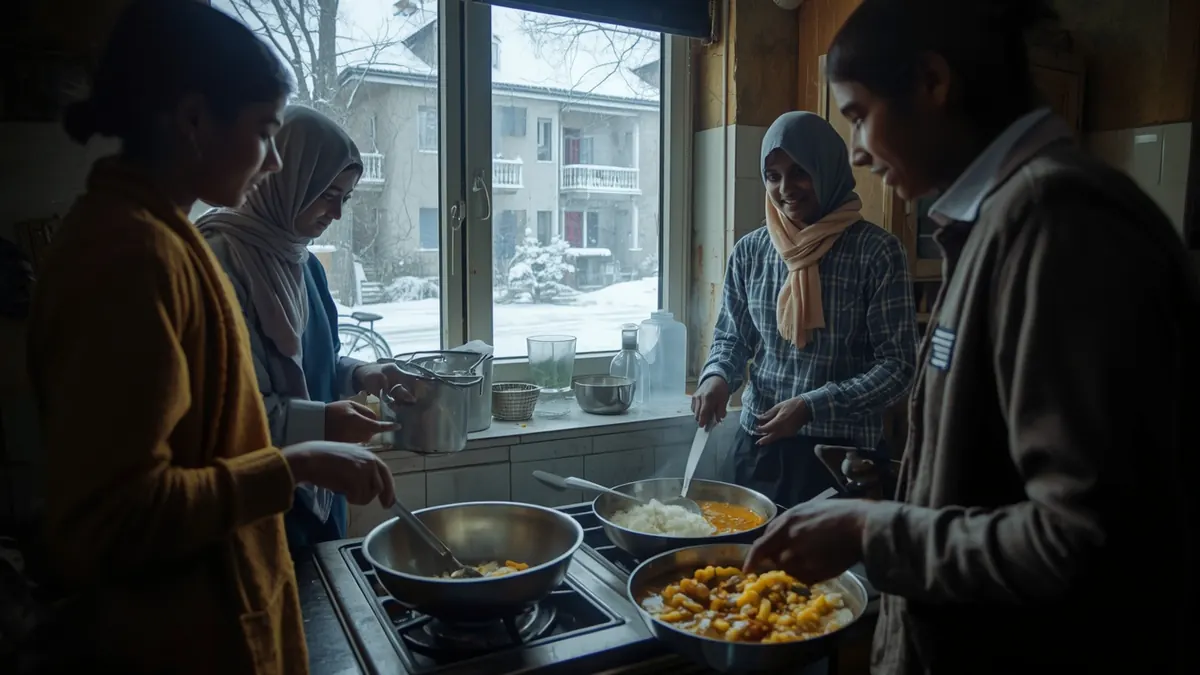
A student therefore needs three things from the hostel, and a family should ask the university for all three in writing before paying the first instalment:
- A shared kitchen on the floor or in the block, with working stoves, and information on how many students share one.
- Permission for small appliances, such as a rice cooker, kettle or induction plate. Rules may differ between hostels. Do not carry a rice cooker from Kerala until you have asked, because plugs also differ.
- A place to store food, including a shared fridge, and a rule on who cleans the kitchen.
Some universities have canteens and cafés in the main buildings, and students eat there on class days. Ask whether the canteen has vegetarian dishes and what a typical lunch costs. We do not have verified price figures, so we do not quote a monthly amount for food.
What can you carry from Kerala? Customs limits
This is where Kerala students often make mistakes. The MEA advisory warns that the Russian Federation prohibits the import of animals, products of animal industries and forage, in hand baggage and check-in luggage, and cites Article 14 of the Russian law on veterinary service. In plain terms, that covers meat, fish and animal products, and so includes the dried fish and fish pickles that many Malayali families pack. It also puts ghee and other dairy in doubt. A 2026 guide to Russian customs by Russiable, a commercial site, says that travellers may carry up to 5 kg of meat and dairy in sealed industrial packaging with a label and expiry date, and up to 5 kg of fruit, vegetables, nuts and dried products without a phytosanitary certificate, but that guide does not mention spices or rice and says goods that do not follow the rules can be confiscated and fined. The two sources do not match, so we advise this:
| Item from Kerala | Our advice |
|---|---|
| Dry fish, fish pickle, any meat | Leave at home. The MEA advisory prohibits animal products in baggage. |
| Ghee and dairy products | Do not carry unless the university or customs confirms in writing. Animal-origin rule applies. |
| Ready-made spice powders in sealed factory packs | Usually the safest choice. Keep the original pack and label, and carry a small quantity. |
| Rice, dal, dried goods | Heavy, and easy to buy in Russia. Carry a few days' supply at most. |
| Fresh vegetables, fruit, plants, seeds | Do not carry. Plant products need a phytosanitary certificate beyond small limits. |
| Tea, instant coffee, sealed snacks, sweets in sealed packs | Probably fine when sealed and labelled, but confirm with the airline and customs; keep the weight small. |
Declare what you carry, keep the packaging, and do not rely on rules you have read on a forum. Weight matters too: you will be carrying documents, books and winter clothes. See our winter packing list.
Cooking in a shared hostel kitchen: practical tips
- Start simple. A rice cooker, one pan and one pot cover most of what a student cooks on weekdays. Buy what the seniors use, and keep the first-week purchases small.
- Cook in batches. A curry for three days saves time in the exam period. Label and date containers in the shared fridge.
- Join a cooking group. Students from the same region often cook together, which cuts cost and makes weekends easier. Many senior Indian students share their shop lists with new arrivals if you ask.
- Learn the Russian names of food items. Basic Russian helps at the supermarket and later in the wards. Our Malayali student life post covers language.
- Respect the kitchen. Strong frying smells and unwashed pans cause arguments. Clean up, and use the exhaust or window where there is one.
Talk to a Kerala student in Russia before you decide
Ask us for contact with current students; they can tell you about their hostel kitchen and where they buy rice and spices.
Vegetarian, halal and other food needs
Russian home cooking uses a lot of meat, including pork, and also dairy, eggs and potatoes. A vegetarian can eat in Russia, but you must read labels and ask. In a canteen, check whether a soup is made on meat stock, and whether the salad contains meat. Halal availability differs from city to city and from shop to shop, and we have no verified data on it. If you eat only halal or only vegetarian food, tell the university's international office before you accept admission and ask the senior students from your community. A student who does not cook at all will find the first month hard, so learn five basic dishes at home.
What it costs to eat
We do not have a verified figure for food costs in any specific city, because published figures are mostly agents' estimates, and prices rise with inflation and the exchange rate. The sensible method is to ask three senior students what they spent on groceries last month, drop the highest and lowest, and add 20% for the first year when you do not know the shops. Our cost of living guide explains how to build the budget. The Central Bank of Russia rate on 15 October 2026 was ₹1.132 per rouble. Eating regular meals, with some protein and vegetables, matters in a cold climate; see the weather for each city in the city guides.
Questions to ask before you pay the first fee
| Question | Who can answer |
|---|---|
| Is there a kitchen on each floor, and how many students share it? | The university's international office or a current student |
| May I use a rice cooker or an induction plate in my room? | Hostel administration |
| Where do Indian students buy rice, spices and vegetables? | Current Indian students, ideally from Kerala |
| Is there a canteen with vegetarian dishes, and what does lunch cost? | Current students |
| What food can I bring through customs? | Federal Customs Service, your airline and the university |
Contact us for an introduction to students already at your chosen university. Our university pages list fees and hostel details where the university publishes them, and the safety post covers other things to ask.
Ask for the hostel kitchen details
Tell us the university; we ask the international office about kitchens, appliances and meals.
Indian Food in Russia: Frequently Asked Questions
Is Indian food available in Russia for students?
In big cities such as Moscow and Saint Petersburg you may find Indian restaurants and shops, but we could not verify any named place, and smaller university cities may have none. The MEA advisory says students are generally expected to cook their own food, so plan for that.
Can I carry dry fish or ghee from Kerala to Russia?
The MEA advisory says Russia prohibits animal products in hand and checked baggage. That covers dry fish, and ghee is doubtful. Leave them at home or get written confirmation from customs. A commercial 2026 guide gives a 5 kg limit for sealed, labelled animal products, but it conflicts with the MEA text.
Do Russian hostels have a mess or canteen?
The MEA advisory says hostels at many universities do not offer boarding, and fee pages list hostel charges without meals. Some universities have canteens in the main buildings. Ask the international office for details about your hostel.
Is vegetarian food easy to find in Russia?
You can eat vegetarian in Russia, but Russian cooking uses a lot of meat and dairy, so read labels and ask about stock in soups. Tell the university about your diet before admission and ask senior students where they shop.
Can I carry spices and a rice cooker?
Sealed factory-packed spice powders are the safest food to carry. Ask your hostel before buying or carrying a rice cooker, because rules and electrical plugs differ. Check your airline's baggage weight and the customs rules before you pack.
How much does food cost for a student in Russia?
We have no verified monthly figure for any city and do not quote one. Ask three senior students what they spent on groceries last month, and keep a reserve of 20% for the first year.
Sources: Ministry of External Affairs of India, "Advisory for Indian students going abroad for education: Russian Federation" (undated and from the Screening Test era; hostel, cooking and animal-products points); Russiable, "Russia Customs in 2026: What You Can Bring", updated 3 May 2026 (commercial guide, quotas for plant and animal products); Kazan State Medical University English fee page, read through the Internet Archive (hostel fee); Central Bank of Russia rate of 15 October 2026. The Federal Customs Service and Rosselkhoznadzor publish the binding rules. Checked October 2026.