Malayali Student Life in Russia: Onam, Food, Language and Where to Get Help
Thousands of Indian students study medicine in Russia, and many are from Kerala, but no university publishes a count of Malayali students, so we do not give one. This post covers what we could verify about daily life: the time difference for phone calls home, Russian lessons, cooking, Onam celebrations in Moscow, the NORKA student ID card, and the Indian Embassy and consulates. Where we found no source, we say so.
In short: a Malayali student in Russia lives in a hostel with a shared kitchen, studies in English in the first years and meets Russian-speaking patients in the clinical years, and lives on a clock that is 2.5 hours behind Kerala in Moscow and 1.5 hours ahead in Novosibirsk. The Embassy of India in Moscow has reported on Onam celebrations organised by the All Moscow Malayalee Association, so a Kerala community exists at least in Moscow. We found no verified Malayali student group in other cities and no published count of Malayali students anywhere. Register with NORKA Roots for a student ID card (₹315 including GST, with accident cover) and on the MADAD portal of the Ministry of External Affairs before you travel.
How many Malayali students are there, and where?
We cannot tell you. Neither Russian universities nor the Indian Embassy publish a state-wise count of students. What is on record is the total for Indians: External Affairs Minister S. Jaishankar said when he opened the new Indian Consulates General in Kazan and Yekaterinburg on 19 November 2025 that the Indian community in Russia includes more than 30,000 students, about 7,000 in the jurisdiction of Kazan and about 3,000 in that of Yekaterinburg. These numbers include all states.
An indirect sign of how large the Indian groups are comes from the FMGE reports. The National Board of Examinations reports show, for example, that 1,586 graduates of Kazan State Medical University and 1,460 graduates of Orenburg State Medical University sat FMGE between 2022 and 2025. Those are all-India figures, not Malayali ones, but they show that Indian students are a regular and large group at both. Ask the university to put you in touch with a Kerala student before you decide; our university pages show the fee and FMGE record, and we can arrange a call.
Time difference and calling home
Russia has several time zones and does not use daylight saving time. India is at UTC+5:30. The table shows what that means when a parent in Kerala calls in the evening.
| Cities | Russia time | Difference from Kerala | When it is 8:00 p.m. in Kerala |
|---|---|---|---|
| Moscow, Kazan, Kursk, Smolensk, Tver | UTC+3 | Kerala is 2 h 30 min ahead | 5:30 p.m. |
| Ufa, Orenburg, Perm, Yekaterinburg | UTC+5 | Kerala is 30 min ahead | 7:30 p.m. |
| Omsk | UTC+6 | Kerala is 30 min behind | 8:30 p.m. |
| Novosibirsk, Tomsk, Kemerovo, Krasnoyarsk | UTC+7 | Kerala is 1 h 30 min behind | 9:30 p.m. |
The practical point: a call at 8 p.m. in Kerala is 5:30 p.m. in Moscow, when your child may still be in the hospital or in class, and 9:30 p.m. in Novosibirsk, when the hostel is settling down. Fix a weekly call time that suits both.
Language: English first, Russian for the wards
The NMC requires the medium of instruction of the course to be English, so the lectures for Indian groups are in English. But patients in the hospital speak Russian, and the clinical years put you in front of them. The older MEA advisory for students in Russia warned in plain terms that many institutions teach in English for the first three years and expect Russian from the fourth, and told students to ask for the licence for English-medium teaching. Whatever the rule at your university, a student who starts Russian lessons in the first term has a better time in the wards. Ask whether the university teaches Russian as a subject, how many hours a week, and whether clinical teachers use English with Indian groups. Our MBBS subjects post shows when clinical subjects begin.
Food and Onam
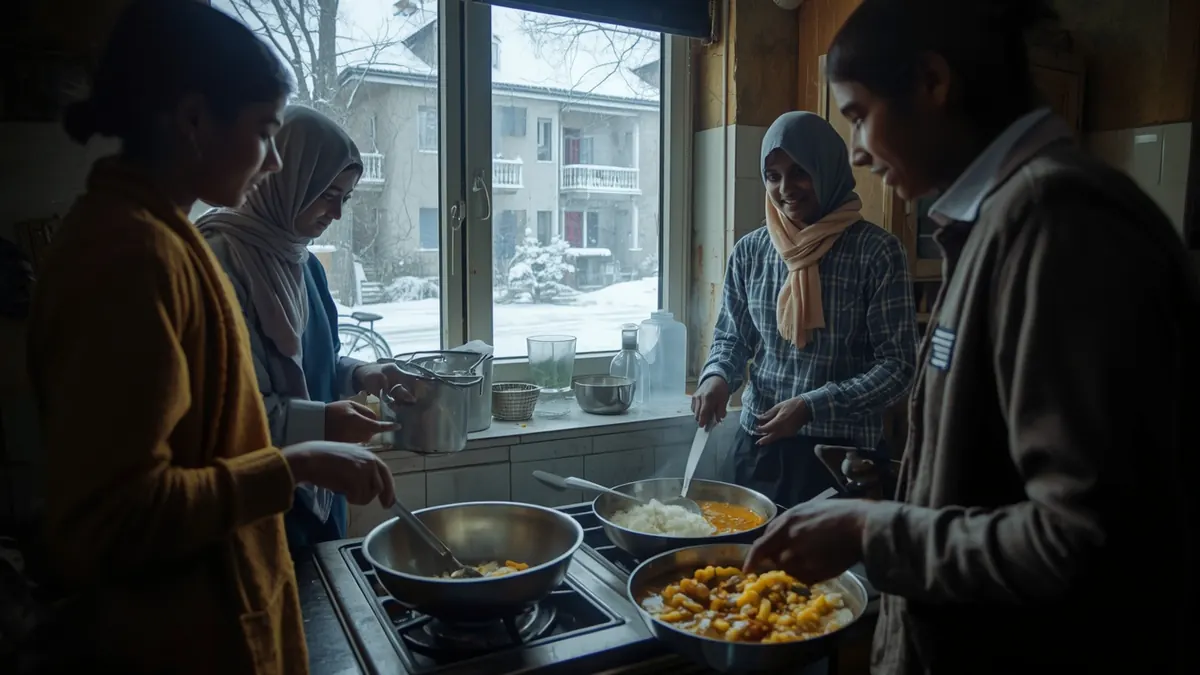
Food is the first thing every Malayali parent worries about. The Ministry of External Affairs advisory says that students are generally expected to cook their own food, and we explain the kitchens, customs limits and the dry fish problem in our Indian food in Russia post. Bring a small kit of sealed spices and learn five dishes before you go.
Onam is the clearest example of Kerala community life in Russia that we could verify. The Embassy of India in Moscow reported on an Onam celebration in Moscow on 30 August 2015, organised by the All Moscow Malayalee Association (AMMA), with a Thiruvathira performance and the Onam sadya. An earlier report from 2013 described the Onam programme as an annual event run by AMMA. The association's page on a social network lists an Onam celebration in Moscow in 2024. We read these reports through search summaries and could not open the pages fully, so confirm the current programme with AMMA. We found no verified report of an Onam celebration or a Malayali association in Kazan, Ufa, Kursk, Orenburg or other university cities, and we will not assume one. If you go there, ask the seniors; students in a hostel often cook a feast together, but we have no source to say it happens at your university.
Talk to a Malayalam-speaking counsellor
Ask us to connect you with a student from Kerala at your university; we answer in Malayalam and English.
Who helps a Kerala student in Russia
- The university's international office. The first call for hostel, registration, visa extension and health insurance.
- Indian Embassy in Moscow and consulates. India has the Embassy in Moscow, consulates in Saint Petersburg and Vladivostok, and Consulates General in Kazan and Yekaterinburg, opened on 19 November 2025. The Kazan consulate sent officials to Ufa in February 2026 when Indian students were injured there.
- MADAD student module. The Embassy invites all Indian students in Russia to register on the Ministry of External Affairs' MADAD portal (student login) so that it can reach them.
- NORKA Roots student ID card. NORKA Roots issues an ID card to Malayali students who have completed the admission process abroad and are 18 or older. The registration fee on its page is ₹315 per card including GST. The page describes personal accident cover of ₹4 lakh for death and up to ₹2 lakh for permanent or partial disability. The documents are copies of the passport (front and address pages), proof of admission and a photo and signature in JPEG. The helpdesk numbers listed are 0471 2770543 and 2770528, and the email is [email protected]. Confirm terms on the NORKA Roots website before you apply.
NORKA Roots also handles attestation of documents in Kerala; see the NORKA attestation guide. Keep a record of these contacts with your parents before you fly.
Money, fees and the rouble
Pay fees directly to the university and keep every receipt. That is the advice of the MEA advisory, which describes cases where an intermediary collected money and did not deposit it with the university, so that enrolment was terminated. The rouble-rupee rate moves, and the Central Bank of Russia rate on 15 October 2026 was ₹1.132 per rouble. Ask the university how the first instalment is paid and how a student gets a bank card in the first weeks, and see the fee table and education loan pages for planning.
Health, homesickness and safety
The first winter is the hardest. Students from Kerala arrive in a different language, food and climate; the winter packing list prepares you for the cold. Homesickness is common in the first term. Practical remedies are not complicated: a fixed call with parents, a cooking group, joining the university's international students' events and finding a senior from Kerala. If you feel low for weeks, tell the international office and your parents, and see a doctor. Take medical insurance seriously: the MEA advisory recommends full cover for treatment and accidents before you enter Russia.
On safety, two final-year students from Kerala drowned in a lake near Smolensk State Medical University in June 2023, according to Onmanorama, and we say plainly: stay away from the edge of rivers, lakes and ice, and never swim in a place you do not know. For the wider picture, including border regions and airport restrictions, read is MBBS in Russia safe.
Finally, remember why you are there. Graduates of Russian universities passed FMGE at about 25% over 2022–2025 combined, so the years of study need a plan: lectures, clinical work and FMGE preparation from the third year. See FMGE pass rate by university.
Meet a student from Kerala before you decide
Tell us the university; we try to arrange a call with a current student.
Malayali Student Life in Russia: Frequently Asked Questions
How many Malayali students are in Russia?
No official count by state is published, so we do not quote one. External Affairs Minister S. Jaishankar said in November 2025 that more than 30,000 Indian students live in Russia, about 7,000 in the jurisdiction of the Kazan consulate. Ask your university to connect you with students from Kerala.
Is there an Onam celebration for Malayali students in Russia?
The Embassy of India in Moscow reported an Onam celebration organised by the All Moscow Malayalee Association in 2015, and the association's page lists one for 2024. We found no verified Onam events in other cities. Ask senior students at your university.
What is the time difference between Kerala and Russia?
Moscow and Kazan are 2 hours 30 minutes behind Kerala. Ufa, Orenburg and Perm are 30 minutes behind. Omsk is 30 minutes ahead, and Novosibirsk, Tomsk and Kemerovo are 1 hour 30 minutes ahead of Kerala.
Do I need to learn Russian to study MBBS in Russia?
Teaching for Indian groups must be in English under NMC rules, but patients in hospital speak Russian, so basic Russian helps in the clinical years. Start lessons in the first term and ask the university how many Russian hours it teaches.
Can a Malayali student apply for a NORKA ID card from Russia?
NORKA Roots says Malayali students who have completed admission and are studying abroad, aged 18 or older, can apply. The fee shown is ₹315 including GST and the card carries accident insurance cover. Check the NORKA Roots student ID page for current terms.
Whom should a student call in an emergency in Russia?
Call the university's international office first and then the nearest Indian Embassy or consulate. Register on the MADAD student module before you need help, and keep NORKA Roots and your parents' numbers with you.
Sources: External Affairs Minister's remarks at the inauguration of the Consulates General of India in Kazan and Yekaterinburg, 19 November 2025 (All India Radio, Deccan Herald, Ministry of External Affairs transcript); NBEMS FMGE reports 2022–2025 as used on our university pages; Embassy of India, Moscow, report on Onam in Moscow, 30 August 2015, and the AMMA page (read through search summaries only); Russia Beyond, 2013, on the annual Onam event (summary only); NORKA Roots student ID page (norkaroots.org/student-id); Embassy of India in Moscow, MADAD student module page; Ministry of External Affairs, "Advisory for Indian students going abroad for education: Russian Federation" (older text; cooking, language, fee payment and insurance advice); Siasat, 8 February 2026 (Ufa); Onmanorama, 26 June 2023 (Smolensk); NMC Foreign Medical Graduate Licentiate Regulations 2021; Central Bank of Russia rate of 15 October 2026. Time zones are standard civil time for the cities named. Checked October 2026.