How to Become a Surgeon: NEET, MBBS, MS General Surgery, Years and Cost
A surgeon in India is an MBBS doctor who has passed NEET-PG and completed a three-year MS in General Surgery, with an optional MCh after that. This guide lays out the path for a Kerala student step by step, the minimum years with an Indian or a Russian MBBS, what each step costs, and how hard the seats are to get.
In short: to become a surgeon in India you need Class 12 with Physics, Chemistry and Biology, NEET-UG, an MBBS, a year of internship, then NEET-PG and a three-year MS in General Surgery. The minimum after Class 12 is 8.5 years with an Indian MBBS (4.5 years of study, 1 year of internship, 3 years of MS) and 10 years with a Russian MBBS (6 years, 12 months of internship in India after FMGE, 3 years of MS). A super-specialty MCh adds 3 years. In the NMC seat matrix for 2026-27 India has 5,591 MS General Surgery seats and Kerala 154, so the last step is the hardest one.
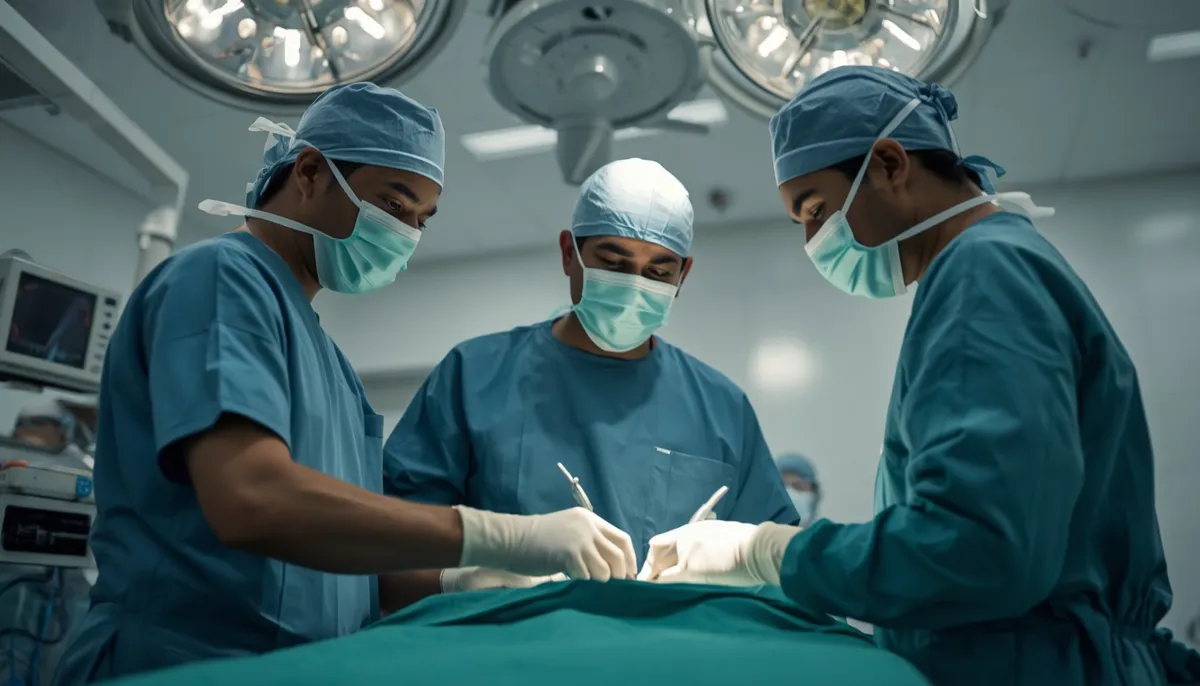
How to become a surgeon after Class 12: the steps
People ask "how do I become a surgeon" as if one degree does it. In India it takes several exams and degrees, in a fixed order. This is the order for a student from Kerala.
- Class 12 with PCB. You need Physics, Chemistry and Biology with at least 50% marks (40% for reserved categories) and an age of 17 by 31 December of the admission year.
- NEET-UG. It is compulsory for MBBS in India and, under the NMC rules, for MBBS abroad. For NEET-UG 2026 the qualifying mark was 213 out of 720 for general and EWS candidates (144 in 2025), 194 for general PwBD and 177 for SC, ST and OBC. The original exam of 3 May 2026 was cancelled after an alleged paper leak and re-held on 21 June; the result came on 16 July 2026. A seat in Kerala needs a high rank, while a Russian university needs only the qualifying score. See NEET 2026 result: what next.
- MBBS. In India it is 4.5 years of study plus a 12-month internship. In Russia it is 6 years, which under the NMC Foreign Medical Graduate Licentiate Regulations 2021 means at least 54 months of English-medium study plus a 12-month internship at the same university.
- FMGE (only for a degree from abroad). The screening test is held by NBEMS three times a year since 2026. Russian graduates passed at about 25% over 2022–2025 combined; see the FMGE exam guide. NExT is meant to replace it but was not in force in October 2026; read FMGE vs NExT.
- 12-month internship in India. Graduates from abroad repeat an internship in an Indian hospital after FMGE. The internship rules page explains who allots it.
- NEET-PG. This is the entrance for MS and MD. NEET-PG 2026 was held on 30 August 2026 and the result came on 24 September; the qualifying score was 262 for general and EWS candidates. A graduate from abroad must have the FMGE pass and the internship done by the date NBEMS sets in its bulletin (Careers360 reported 30 September 2026 for this year).
- MS General Surgery, 3 years. You become a general surgeon here. You can also take DNB General Surgery, which is filled through the same counselling.
- Optional: NEET-SS and MCh, 3 years. A super-specialty degree such as urology, paediatric surgery, plastic surgery or neurosurgery needs a feeder MS or DNB in surgery and a separate NEET-SS exam.
How many years to become a surgeon
The minimum count after Class 12 is simple arithmetic, and it assumes you pass every exam at the first attempt and join each course at once. Real timelines are longer, because each exam is held once or twice a year and counselling takes months.
| Route | MBBS and internship | MS General Surgery | Total as general surgeon | With MCh |
|---|---|---|---|---|
| Kerala or other Indian college | 5.5 years | 3 years | 8.5 years (age 26.5) | 11.5 years (age 29.5) |
| Russian state university | 6 years in Russia, 1 year in India | 3 years | 10 years (age 28) | 13 years (age 31) |
So the Russian route is one and a half years longer on paper, and any failed FMGE attempt adds months. A repeat year for NEET-UG, a wait for a PG seat or a failed attempt at NEET-PG all add to both routes. On the table's own assumptions the MS ends at 26.5 or 28, and a longer road pushes it later.
What it costs to become a surgeon, step by step
Only tuition is counted here, from official documents or the university price lists. Hostel, food, flights, coaching and exam fees come on top, and some of them are large in Russia.
| Step | Fee | Note |
|---|---|---|
| MBBS, Kerala government college | ₹23,150 a year; about ₹1 lakh for 4.5 years | Tuition only; very few seats |
| MBBS, Kerala self-financing college | ₹8,10,175 a year (2025-26, provisional); about ₹36 lakh for 4.5 years | One college's CEE Kerala figure; the 2026 fee may change |
| MBBS, Russian state university | ₹2.4 lakh to ₹14.1 lakh a year; about ₹14–33 lakh for six years outside Moscow | Official first-year price lists; see the fee table |
| MS, Kerala government college | ₹57,890 a year tuition plus ₹11,580 miscellaneous fee | CEE Kerala PG prospectus 2023-24; the 2025 counselling list gives the same tuition |
| MS, Kerala self-financing college | ₹18,36,456 to ₹19,42,235 for a clinical seat; NRI seats ₹38,86,680 to ₹40,81,014 | 2025 CEE Kerala list as reported; confirm whether the fee is yearly. If yearly, three years come to ₹55–58 lakh |
| MCh super-specialty | Not verified | Fees differ by college; check the MCC and state notices |
In Kerala a government PG seat is far cheaper than any other step: three years of tuition come to about ₹1.7 lakh (₹57,890 × 3), and the resident is paid a stipend. Kerala Kaumudi reported in July 2026 that the stipend in Kerala government colleges is ₹57,900, ₹58,900 and ₹60,000 a month for years 1 to 3, about ₹21.2 lakh over the course; the 2019 government order had set ₹53,000, ₹54,000 and ₹55,000. Confirm the current rate with the college.
The catch is the bond. The CEE Kerala prospectus requires a government PG candidate to serve one year as Senior Resident after the course and to pay ₹50 lakh as liquidated damages if he or she leaves the course after the final allotment. Kerala's state-quota seats are also meant for candidates of Kerala origin, and graduates from abroad must hold registration and have finished the internship. Read the current year's prospectus before counting on a government seat.
Planning the road to MS General Surgery?
Send your NEET score and category; we show the MBBS options and the full path to NEET-PG in one page.
MS General Surgery seats: how competitive is it
NEET-PG is a rank game. Surgery is one of the larger branches by seats, but the seats are still few against the number of candidates. The NMC seat matrix released on 29 September 2026 lists these numbers for 2026-27, as reported by Medical Dialogues:
| MS General Surgery seats, 2026-27 | Seats |
|---|---|
| India | 5,591 |
| Karnataka (the most) | 676 |
| Maharashtra | 628 |
| Tamil Nadu | 621 |
| Kerala | 154 |
For scale, the same matrix has 63,177 MD, MS, diploma, DM and MCh seats in all, and 2,65,960 candidates sat NEET-PG 2026. That is about four candidates for every seat of any kind, and the total includes DM and MCh seats, which NEET-PG candidates cannot take, so the pressure on MD and MS seats is higher than that. For comparison, Kerala has 5,404 MBBS seats in 2025-26 and 154 MS General Surgery seats. We did not find closing ranks for MS General Surgery from an official source, so we give none.
What does this mean for a family? A seat in MS General Surgery is not certain even for a student with a Kerala government MBBS. Every extra attempt costs a year. Plan for a second attempt, for DNB seats at hospitals, and for a different branch as a fallback. If your child will only be happy as a surgeon, begin NEET-PG preparation in the internship year.
Surgical skills need operating-theatre time: what to check in a Russian university
A surgeon is trained by doing operations under supervision. The MBBS gives you the base, the MS gives you the volume of cases. A student who chooses Russia and wants surgery should ask each university these questions in writing, and compare the answers across two or three universities.
- Hospital base. Does the university own its teaching hospital, or send students to city hospitals? Ask for the names of the hospitals where the surgery department works and how many surgical beds it has.
- Practical hours. How many clinical hours a week do Indian-medium groups get in surgery in the third, fourth and fifth years, and how many students share one ward?
- Language with patients. Teaching is in English, but patients speak Russian. Ask how much Russian is taught and when clinical rotations start.
- Operating-theatre access. Can a student scrub in and assist, or only watch from a corridor?
- FMGE results. The surgery paper is part of FMGE, and a university's last three NBEMS reports show how its graduates do. See FMGE pass rates by university and the list of medical colleges.
- The internship year. The NMC rules require 12 months at the same university; ask where the internship is done and in which departments.
These checks matter more for a future surgeon than the rank of a university in a magazine. A graduate with weak clinical exposure can still pass FMGE, but will probably find MS General Surgery harder, because a resident works in the operating theatre from the first year. A Russian graduate who also does a year of internship in a busy Kerala or Indian hospital, as the rules demand, closes part of this gap.
After MS: MCh, DNB and branches of surgery
Most surgeons stop at MS General Surgery and work in general surgery in a district hospital, a private hospital or as faculty. Others go on to a super-specialty. The NEET-SS surgical group, as listed by coaching sites, covers paediatric surgery, surgical gastroenterology, neurosurgery, plastic and reconstructive surgery, urology, vascular surgery, surgical oncology, endocrine surgery and cardiothoracic surgery. For NEET-SS 2025 the MCC matrix had 7,579 super-specialty seats in all, 4,312 DM and MCh and 3,267 DrNB, for every speciality together, so these seats are far fewer than MS seats. The NEET-SS 2025 exam was held on 26 and 27 December 2025.
Some branches have their own route. Orthopaedics, ENT and ophthalmology are MS or MD degrees of their own, entered directly through NEET-PG, and cardiologists take a medical (not surgical) route; see how to become a cardiologist and how to become a neurologist. A parallel specialty that also needs MBBS and NEET-PG is described in how to become a gynecologist, and the skin branch in how to become a dermatologist.
What a surgeon earns: official figures only
Two things are often confused. The Kerala government post called Assistant Surgeon is an MBBS-level post, not a surgeon's post. Its pay scale is ₹63,700–1,23,700 a month (Kerala PSC Category No. 177/2025). A specialist surgeon has a postgraduate degree and is paid differently.
The clearest public figure for a surgeon in Kerala is a National Health Mission notice. NHM Kollam's walk-in interview notice No. NHM/KLM/133/2026-A3 of 20 August 2026 lists a Surgeon post, with an MS in Surgery, a diploma or a DNB in Surgery and permanent registration with the Travancore-Cochin Medical Council, at a salary of ₹78,000 a month. It is a contract post, initially for three months, and can be extended. Our post on doctor salary after MBBS from Russia shows the other official figures. We found no official figure for private hospitals, and we do not give one. Any surgeon's income in a private hospital depends on the hospital, the city and the number of cases.
For a family, the simple point is that a surgeon's earning years start late: at 28 to 31 in the Russian route. That is why the cost of the MBBS and the loan size matter; see the Kerala vs Russia fee comparison and the page on what happens after MBBS in Russia.
Check your MBBS options for a surgery career
Send your NEET score, category and budget. We compare Kerala seats and Russian universities by FMGE results, hospital base and total cost.
Which route should a Kerala family choose
If the NEET rank gets a Kerala government MBBS seat, take it. The tuition is about ₹23,150 a year, the clinical training is in Malayalam and English, and there is no FMGE. If the rank gets a self-financing seat, compare about ₹36 lakh of tuition for 4.5 years with a Russian state university outside Moscow at about ₹14–33 lakh for six years, and add the cost of living abroad, the extra year and the FMGE risk. If there is no seat in Kerala, Russia or another country is a real option, but a future surgeon should choose a university for its hospital and FMGE record, not for the lowest fee.
One more point for parents. MS General Surgery is a long road, and a student with a weak interest in operating work will be unhappy at 28. Encourage the student to spend time in a surgical ward, as an observer, before the final choice.
How to Become a Surgeon: Frequently Asked Questions
How can I become a surgeon after Class 12?
Pass Class 12 with Physics, Chemistry and Biology, qualify NEET-UG, finish an MBBS and a one-year internship, then pass NEET-PG and complete a three-year MS in General Surgery. A student with a degree from abroad must also pass FMGE and repeat a 12-month internship in India before NEET-PG.
How many years does it take to become a surgeon in India?
At least 8.5 years after Class 12 with an Indian MBBS: 4.5 years of study, 1 year of internship and 3 years of MS. With a Russian MBBS the minimum is 10 years, because of 6 years in Russia and a second internship in India. A super-specialty MCh adds 3 years.
How much does it cost to become a surgeon?
Tuition runs from about ₹1 lakh for a Kerala government MBBS to about ₹36 lakh for a self-financing seat, and about ₹14–33 lakh for six years in a Russian state university outside Moscow. A Kerala government MS costs about ₹1.7 lakh in tuition over three years; a self-financing clinical MS was listed at ₹18.4–19.4 lakh in 2025. Living costs are extra.
Is an MBBS doctor a surgeon?
No. An MBBS doctor is a general doctor, even if the Kerala government post is called Assistant Surgeon. A surgeon holds an MS or DNB in General Surgery, and the MS needs NEET-PG and three more years.
Can I become a surgeon after MBBS from Russia?
Yes, if the course meets the NMC rules and you pass FMGE, complete the 12-month internship in India and register. After that you can sit NEET-PG like any other MBBS doctor. The hard parts are FMGE, which about one in four Russian graduates passed in 2022–2025, and the limited number of MS seats.
What is the difference between MS, MCh and DNB in surgery?
MS General Surgery is the three-year postgraduate degree that makes a general surgeon. MCh is a three-year super-specialty after MS or DNB, entered through NEET-SS. DNB is the National Board's equivalent of the MS and is also filled through NEET-PG counselling.
Sources: NEET-UG 2026 results as reported by Careers360, Business Today and WION (qualifying marks 213, 194 and 177 out of 720; re-exam of 21 June 2026; result of 16 July 2026); Careers360 on NEET-PG 2026 (held 30 August 2026, result of 24 September 2026, qualifying 262); NMC Foreign Medical Graduate Licentiate Regulations 2021; NMC PG Medical Education Regulations 2023 as summarised by Medical Dialogues; NMC PG seat matrix 2026-27 as reported by Medical Dialogues (5 October 2026: 5,591 MS General Surgery seats in India, 154 in Kerala; 63,177 PG seats in all); CEE Kerala PG medical prospectus 2023-24 (government fee, bond) and Medical Dialogues on the CEE Kerala 2025 PG list (self-financing fees); Kerala government order of 8 July 2019 on resident stipend as reproduced by Medical Dialogues; MCC NEET-SS 2025 seat matrix as reported by Medical Dialogues; Kerala PSC Category No. 177/2025; NHM Kollam notice No. NHM/KLM/133/2026-A3 of 20 August 2026 (arogyakeralam.gov.in); NBEMS FMGE reports 2022–2025; Russian university price lists. Checked October 2026.